All Categories
Featured
Table of Contents

Detecting Brown Patch and Fungal Stress in Beyond Mowing
High humidity and consistent nighttime temperatures above 65 degrees have made 2026 a particularly difficult year for maintaining pristine turf. Property owners often struggle to differentiate between simple heat stress and the onset of serious fungal infections. Two of the most common culprits, Brown Patch and Dollar Spot, can ravage a lawn within days if the initial symptoms go unnoticed. Identifying these issues before they take hold requires a keen eye for subtle color shifts and texture changes in the grass blades. Success in 2026 relies on early intervention and an understanding of how local weather patterns influence fungal growth.
Brown Patch, caused by the fungus Rhizoctonia solani, typically appears when moisture sits on the leaf surface for extended periods. It manifests as circular areas of dead, tan grass ranging from a few inches to several feet in diameter. In many cases, these patches have a "smoke ring" appearance around the outer edge. This dark, grayish border indicates that the fungus is actively feeding on the grass. Property owners who prioritize investment in Grub Suppression often find that catching these rings early prevents the total collapse of the turf structure.
Soil compaction and poor drainage frequently exacerbate these conditions. When water cannot penetrate the soil, it pools around the roots and crowns of the grass, creating a breeding ground for pathogens. Monitoring the thatch layer is another essential step. Thatch that exceeds half an inch acts like a sponge, holding moisture and fungal spores exactly where they can do the most damage. Removing this organic buildup helps the lawn breathe and allows for better air circulation among the individual blades.
Dollar Spot Indicators for Beyond Mowing
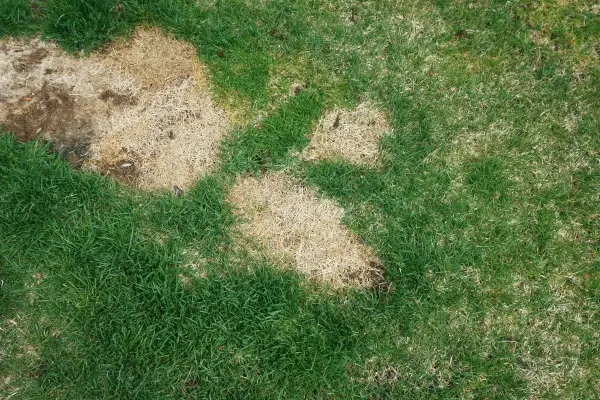
Dollar Spot presents a different set of visual challenges compared to Brown Patch. Named for the small, silver-dollar-sized spots it creates, this disease is caused by the fungus Clarireedia jacksonii. While the individual spots are small, they can quickly merge into large, irregular areas of straw-colored turf. A hallmark of Dollar Spot in 2026 is the presence of hourglass-shaped lesions on the grass blades. These lesions have bleached centers with reddish-brown borders. Early morning inspections often reveal white, cobweb-like growths known as mycelium stretching across the dew-covered grass. This mycelium is a clear sign that the fungus is spreading and requires immediate attention.
Nitrogen levels play a significant role in the prevalence of Dollar Spot. Grass that lacks sufficient nutrients is more susceptible to infection, as it cannot outgrow the damage caused by the fungus. Proactive Grub Suppression Methods provides the necessary oversight to ensure soil chemistry remains balanced. Maintaining a consistent fertilization schedule throughout the 2026 growing season helps keep the grass strong enough to resist the initial invasion of spores. Over-fertilizing with nitrogen can trigger Brown Patch, so a precise balance is required to avoid trading one problem for another.
Mowing height is another factor that influences how Dollar Spot moves through a yard. Scalping the lawn or cutting it too short stresses the plant and opens up more surface area for spores to land and germinate. Keeping the mower blades sharp is equally important. Dull blades tear the grass rather than slicing it, leaving jagged edges that take longer to heal and provide an easy entry point for fungi. Adjusting the mower to a higher setting during the peak of summer heat provides shade for the soil and reduces the overall stress on the root system.
Treatment Protocols for Beyond Mowing
The intersection of disease and insect activity often complicates lawn care in 2026. Pests can weaken the grass, making it nearly impossible for the turf to recover from fungal infections. When the root system is compromised by grubs or sod webworms, the grass cannot absorb the water or nutrients needed to fight off Rhizoctonia. Homeowners relying on Grub Suppression for Local Turf find that a holistic approach to lawn health is the only way to maintain a green space through the humid months. Addressing both the biological fungi and the physical pests creates a multi-layered defense.
Watering habits remain the most controllable factor in disease management. Irrigation should occur in the early morning hours, ideally between 4:00 AM and 8:00 AM. This allows the sun to dry the grass blades quickly. Evening watering is the most common mistake observed in 2026, as it leaves the lawn damp throughout the night, which is exactly when fungi thrive. Deep, infrequent watering is preferable to light, daily sprinkles. This encourages roots to grow deeper into the soil, seeking moisture and becoming more resilient to environmental fluctuations.
- Inspect the lawn twice a week for any circular patterns or straw-colored spots.
- Look for hourglass lesions on individual blades to confirm Dollar Spot.
- Check for the "smoke ring" effect in the early morning to identify active Brown Patch.
- Verify that the thatch layer is not preventing proper drainage and airflow.
- Clean mower decks after cutting infected areas to prevent spreading spores to healthy sections.
Emerging Challenges in the 2026 Growing Season
Environmental shifts have introduced new strains of fungi that appear earlier in the spring than previously recorded. The 2026 season has seen a rise in "Large Patch," a cousin of Brown Patch that specifically targets warm-season grasses as they emerge from dormancy. Because this happens when the grass is still waking up, the damage can be permanent if the roots are killed before they have a chance to establish for the summer. Consistent soil testing is a valuable tool for determining if the lawn has the specific mineral balance required to survive these early-season attacks.
Airflow is frequently overlooked as a preventative measure. Properties with dense perimeter fencing or heavy shrubbery often have stagnant air, which traps humidity near the ground. Selective pruning of low-hanging tree branches or thinning out dense hedges can improve the wind current across the lawn. This simple physical change can significantly reduce the amount of time the grass remains wet after a rainstorm or heavy dew. In the context of 2026 lawn care, every minute the grass is dry counts toward its overall health.
Fungicides are sometimes necessary when cultural practices like watering and mowing are not enough to stop an outbreak. However, over-reliance on chemical treatments can lead to resistance in fungal populations. It is better to rotate different classes of fungicides to ensure they remains effective. These treatments should be seen as a temporary fix while the underlying soil and moisture issues are addressed. A healthy lawn is ultimately a diverse one, and fostering a strong microbial community in the soil can provide a natural buffer against pathogenic fungi.
Maintaining a yard requires vigilance and a willingness to adapt to the specific conditions of the year. While Brown Patch and Dollar Spot are formidable opponents, they are predictable in their requirements for growth. By removing the excess moisture and correcting nutrient deficiencies, the environment becomes hostile to the fungi and favorable to the grass. Proper identification is the first step in this process, allowing for targeted actions that save time and prevent the need for costly turf replacement later in the autumn.

Latest Posts
Ways An Amsterdam Romance Advisor Can Improve Your Communication Skills
Advanced Grub Control Cycles for Healthier Grass
What Climate Means for Future Lawns